Top Music Genres in Order: The Most Popular Genres Worldwide
Top music genres ranked in order of popularity worldwide: hip-hop, pop, rock, country, EDM, and more. See the full top 10 list with streaming data and regional breakdowns.
The top music genres worldwide by popularity are: 1) Hip-Hop/Rap, 2) Pop, 3) Rock, 4) Country, 5) EDM, 6) Latin, 7) K-Pop, 8) R&B/Soul, 9) Jazz, and 10) Classical. These rankings reflect 2025 global streaming data — with 5.1 trillion on-demand audio streams tracked by Luminate — along with chart performance and cultural influence. Hip-hop leads with approximately 25% of U.S. streaming share, while pop maintains the broadest cross-demographic and cross-platform appeal.

Which Music Genres Are Most Popular Worldwide?
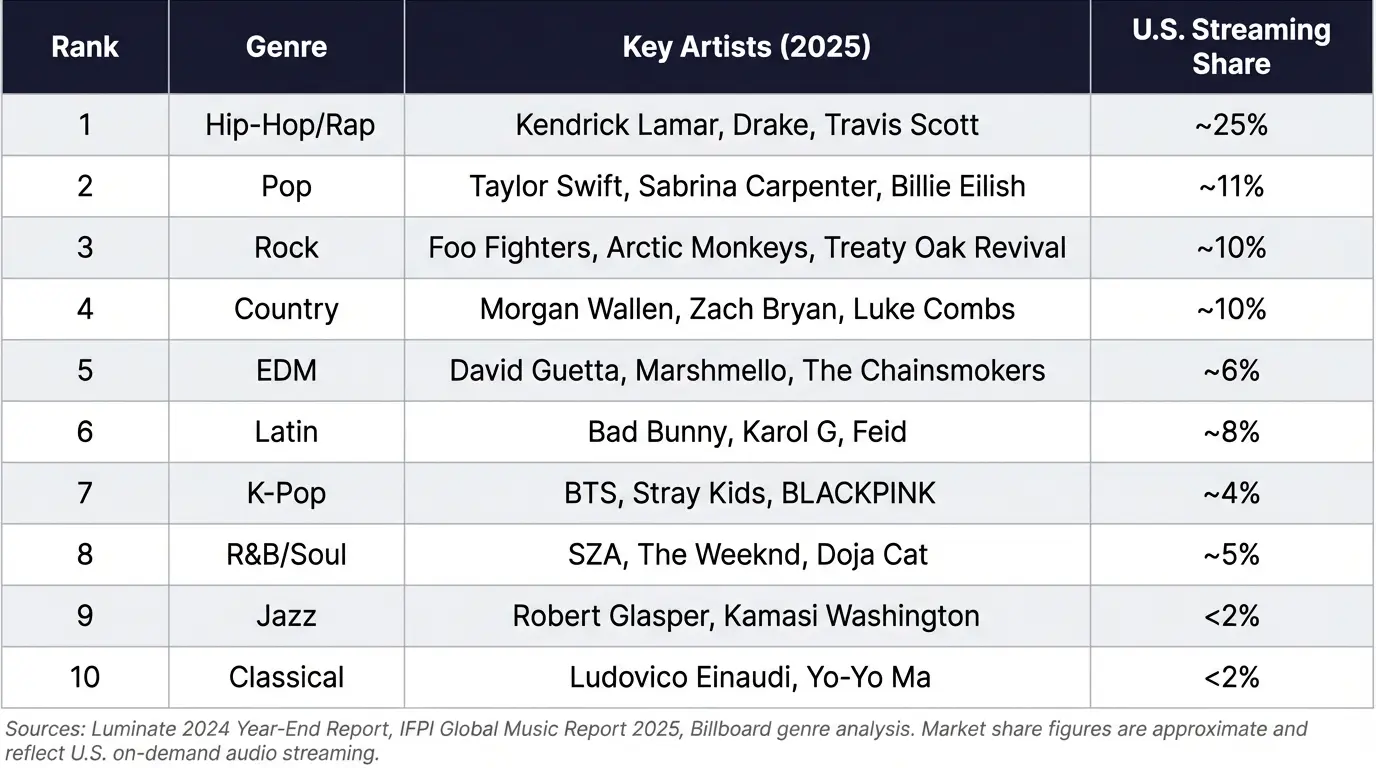
With global on-demand audio streams reaching 5.1 trillion in 2025 — a 9.6% year-over-year increase according to Luminate's Year-End Music Report — streaming data provides the clearest picture of genre dominance worldwide.
With so many diverse music genres available, have you ever wondered which ones consistently top the charts around the world? The music landscape is constantly evolving, with new genres rising in popularity while others maintain their timeless appeal.
This post provides an in-depth look at the top music genres globally, exploring the factors behind their dominance. From streaming trends to cultural influence, discover what makes these genres resonate with listeners today.
Top Music Genres in Order of Popularity
1. Hip-Hop/Rap
Hip-hop has taken the lead as the dominant genre worldwide, influencing not only music but also culture, fashion, and social movements. Streaming platforms like Spotify and Apple Music have played a significant role in its rise, making it easily accessible to global audiences. According to Luminate data, R&B/Hip-Hop commanded a 25.3% share of U.S. on-demand audio streaming in 2024 — more than double the second-place genre, pop, at approximately 11% — though this lead has been gradually shrinking since 2020. That means that Hip-Hops Spotify Royalties are hte higest they've ever been.
2. Pop
Pop music remains a staple in the industry, thanks to its mass appeal and ability to blend influences from other genres like hip-hop, EDM, and rock. Its catchy hooks and wide reach ensure that pop songs consistently stay near the top of the charts.
3. Rock Music
Though rock’s mainstream dominance has waned, it still boasts a loyal following, particularly among older generations. Live performances and music festivals help keep rock alive, with both classic and modern rock bands continuing to attract large audiences.
4. Country
Country music continues to thrive, particularly in the southern US, where traditional themes meet modern influences. Artists are blending pop and rock elements into country music, making it more accessible to a broader audience while retaining its roots. Country's rise is backed by hard data — its U.S. current market share surged 30% in a single year, climbing from 7.97% to 10.37%, driven by breakout artists like Zach Bryan, Luke Combs, and Bailey Zimmerman alongside the continued dominance of Morgan Wallen.
5. Electronic Dance Music (EDM)
With its infectious energy and presence at major global festivals, EDM has cemented its place in modern music. Its high-energy beats make it a favorite for partygoers and festival circuits, fueling its rise in global popularity.
6. Latin Music
Genres like reggaeton, salsa, and bachata have propelled Latin music into global recognition. With younger audiences embracing its vibrant sounds, Latin music has become a major force in shaping global music trends. Latin America's recorded music market surged 22.5% in 2024 according to the IFPI — its 15th consecutive year of growth — while Luminate data shows Latin music gained more U.S. streaming market share than any other core genre in Q1 2025.
7. K-pop
K-pop’s global takeover is largely thanks to groups like BTS and BLACKPINK, whose infectious music and fan-driven social media strategies have helped transcend language barriers and build a massive global following.
8. R&B/Soul
R&B continues to influence both mainstream and niche audiences with its smooth vocals and emotionally driven lyrics. This genre remains a powerhouse in blending deep, soulful soundscapes with modern production techniques.
9. Jazz
While less mainstream, jazz holds a unique position as a genre beloved by enthusiasts seeking complex compositions and improvisational mastery. Its sophistication and dedication to tradition maintain a steady, passionate fan base.
10. Classical
Classical music stands as a timeless genre, deeply rooted in history and tradition. Used often in educational settings and cultural contexts, classical music remains relevant, offering complexity and depth that appeals to both old and new generations.
How Do Streaming Platforms Affect Music Genre Popularity?
The global recorded music market reached $29.6 billion in 2024 according to the IFPI Global Music Report 2025, with streaming revenues exceeding $20 billion for the first time — representing 69% of all industry revenue and underscoring streaming's role as the primary driver of genre popularity.

How Spotify and Apple Music Algorithms Drive Genre Trends
Platforms like Spotify and Apple Music have transformed the way listeners discover music. These services use sophisticated algorithms to recommend music based on user behavior, pushing popular musical genres like hip-hop and pop to the forefront. Personalized playlists such as “Today’s Top Hits” often feature these genres, helping them stay dominant on the global Spotify charts.
How Streaming Broke Down Geographic Barriers for Music
Streaming platforms have made music from all corners of the globe easily accessible. International genres such as K-pop and Latin music have gained immense popularity, as platforms break down geographic barriers and expose listeners to diverse sounds from across the world. With 752 million paid streaming subscribers worldwide as of 2024 — a 10.6% increase from the prior year — streaming platforms have created a truly global audience for music, enabling genres like K-pop, Latin music, and Afrobeats to find listeners far beyond their regions of origin. The scale of modern music streaming is staggering — Luminate reports that 253 million tracks were available across streaming platforms at the end of 2025, with independent artists accounting for 96.2% of all daily uploads.
How Niche Genres Like Jazz and Indie Survive on Streaming
Niche genres like jazz, classical, and indie music have benefited from streaming services. While these genres may not dominate the charts, they are sustained by dedicated listeners who discover them through selected playlists, helping these genres maintain relevance and reach new audiences.
How Music Genre Preferences Vary by Age and Gender

Genre preferences shift significantly across demographics. Younger listeners (ages 13-24) gravitate heavily toward hip-hop/rap and pop, while rock and country dominate among listeners aged 35 and older. Classical and jazz hold the strongest appeal for audiences 55+. Understanding these demographic patterns helps independent artists identify their target audience and tailor their marketing strategies accordingly.
Genre Rankings by Streaming Platform
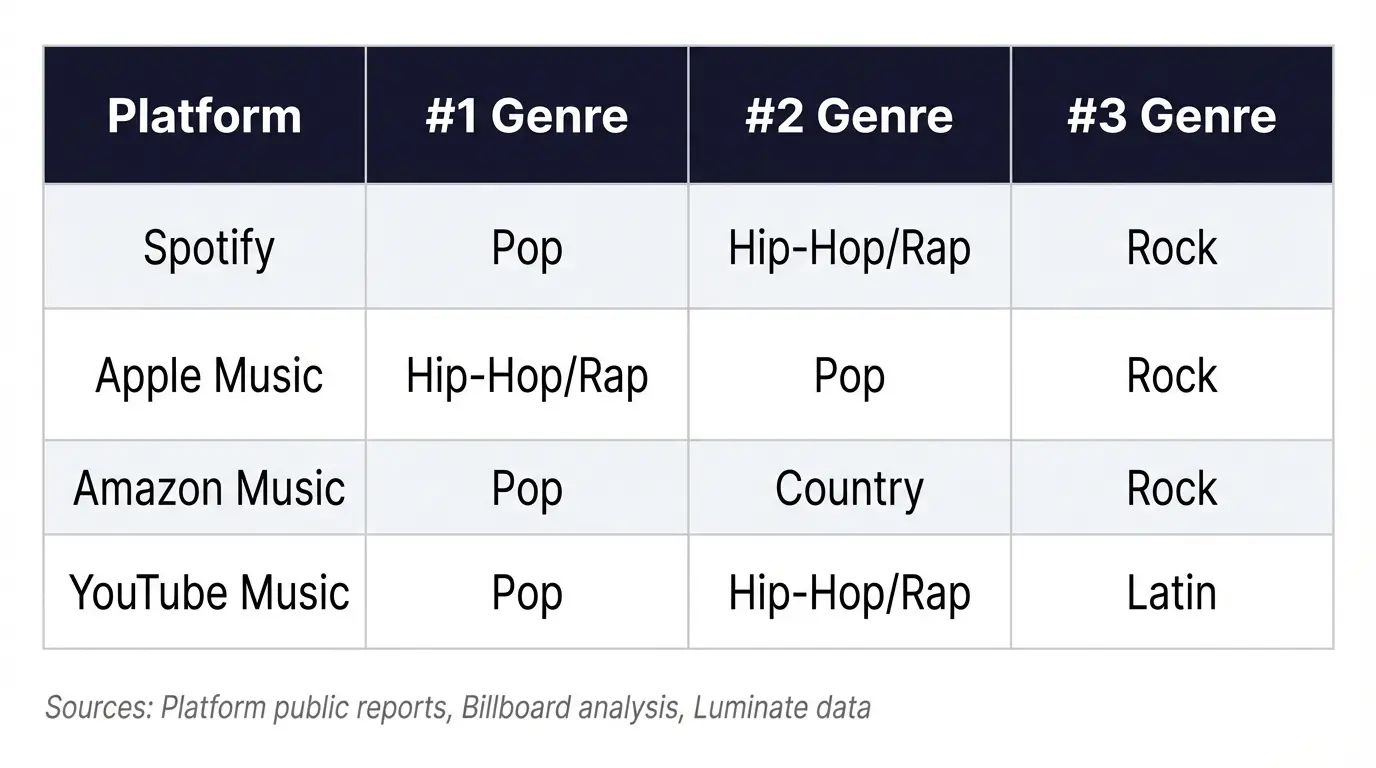
Genre popularity varies across streaming platforms due to differences in audience demographics and algorithmic selection. Hip-hop/rap leads on Apple Music, while pop dominates Spotify and Amazon Music. YouTube Music's global reach gives Latin music a higher position than on Western-focused platforms. These differences matter for independent artists choosing where to focus their promotional efforts.
Most Popular Music Genres by Region

North America
In the US and Canada, hip-hop, pop, and country music dominate the charts. Hip-hop has become a cultural powerhouse, while country continues to thrive, particularly in southern regions, and pop remains ever-present in mainstream media.
Europe
Pop and EDM are the leading genres across Europe, with festivals and clubs playing a key role in the dominance of electronic music. Rock maintains a strong presence, especially in countries like the UK and Germany, where both classic and alternative rock enjoy wide appeal.
Latin America
In Latin America, reggaeton and Latin pop rule the airwaves, reflecting the region’s vibrant culture. These genres have grown beyond regional popularity to influence global music trends, with artists like Bad Bunny and J Balvin gaining international stardom.
Asia
K-pop is the leading genre in South Korea, but its influence has spread far beyond Asia. With the success of groups like BTS and BLACKPINK, K-pop is now a global sensation, especially popular among younger audiences across the continent and the world.
Africa
Afrobeats is rising in popularity both in Africa and globally. Its infectious rhythms and unique fusion of African sounds with modern beats have caught the attention of international audiences, with artists like Burna Boy and Wizkid making waves on the global stage.
How Music Genres Have Evolved by Decade (1950s–2020s)
Music genres have evolved significantly over the decades, reflecting changes in technology, culture, and society. Here’s a brief overview of the most popular music genres by decade, providing a historical list of genres of music that have shaped the industry:
- 1950s: Rock and roll, jazz, and blues dominated the music scene, with iconic artists like Elvis Presley, Chuck Berry, and Little Richard setting the stage for future musical innovations.
- 1960s: The British Invasion brought rock music to the forefront, with legendary bands like The Beatles, The Rolling Stones, and The Who. This decade also saw the rise of folk rock and psychedelic rock, adding new dimensions to the rock genre.
- 1970s: Disco, funk, and punk rock became the defining sounds of the 70s. Artists like Donna Summer, Parliament-Funkadelic, and The Ramones pushed musical boundaries and created enduring hits.
- 1980s: The 80s introduced new wave, synth-pop, and hip hop to the mainstream. Artists like Duran Duran, Prince, and Run-DMC transformed the music industry with their innovative sounds and styles.
- 1990s: Alternative rock, grunge, and electronic dance music gained popularity, with bands like Nirvana and Pearl Jam leading the grunge movement, while Daft Punk brought EDM to new heights.
- 2000s: Pop-punk, emo, and indie rock became the anthems of the 2000s. Bands like Green Day, My Chemical Romance, and Arcade Fire captured the spirit of the decade with their distinctive sounds.
- 2010s: Hip hop, electronic dance music, and pop music dominated the charts. Artists like Kendrick Lamar, Calvin Harris, and Taylor Swift became household names, shaping the musical landscape of the decade.
- 2020s: The 2020s have seen hip-hop and pop continue their dominance, with Afrobeats and Latin music achieving mainstream global status. Artists like Bad Bunny, Burna Boy, and Doja Cat exemplify the genre-blending trend, while AI-assisted production tools and short-form video platforms like TikTok have reshaped how genres gain popularity.
Why Hip-Hop, Pop, and EDM Dominate Global Music Charts

How Hip-Hop and Pop Shape Global Culture
Genres like hip-hop and pop have an undeniable impact on global culture, shaping everything from fashion trends to social movements. Hip-hop, in particular, has become a voice for social change, while pop continues to influence the mainstream with its mass appeal and cultural relevance.
How Genre-Blending Collaborations Create Hit Songs
The blending of genres has become a key factor in reaching broader audiences. Artists frequently combine styles—like pop/hip-hop or reggaeton/EDM—creating hybrid sounds that appeal to a wider demographic. These cross-genre collaborations have led to innovative hits and further genre evolution.
How TikTok and Social Media Drive Genre Popularity
Platforms like TikTok have played a significant role in driving certain genres to the top. Viral challenges and user-generated content can make songs go viral overnight, propelling genres like hip-hop, pop, and reggaeton to new heights. Social media has essentially democratized music discovery, allowing fans to influence trends.
Music Festivals and Live Music's Role in Genre Popularity
Music festivals play a crucial role in sustaining and growing genre popularity worldwide. EDM festivals like Tomorrowland (400,000+ annual attendees) and Ultra Music Festival anchor electronic music's global presence, while country festivals like CMA Fest and Stagecoach reinforce the genre's cultural stronghold. Hip-hop festivals, including Rolling Loud, have helped solidify rap's dominance among younger audiences.
The live music economy saw record growth in recent years, with Luminate data showing concert attendance surging post-pandemic. This live engagement creates a feedback loop with streaming — artists who perform at major festivals see measurable increases in streaming activity in the weeks following their appearances. For independent artists, understanding which genres thrive in live settings versus purely through streaming can shape career strategy.
Fastest-Growing Music Genres to Watch
Afrobeats
Afrobeats, with its vibrant fusion of African rhythms and global sounds, is gaining momentum worldwide. Artists like Burna Boy and Wizkid are leading the charge, and this genre is expected to continue growing as more listeners embrace its infectious beats.
Hyperpop
Characterized by its experimental and highly digital sound, hyperpop is gaining popularity among younger, internet-savvy audiences. Its boundary-pushing approach to music production is attracting a niche yet rapidly growing fanbase, making it a genre to watch.
Indie/Alternative
The indie and alternative scenes are experiencing a resurgence, thanks to platforms like Bandcamp and SoundCloud. Independent artists now have more creative freedom than ever, allowing them to build direct relationships with fans and challenge the dominance of mainstream genres.
Phonk
Phonk has surged from underground niche to mainstream force, particularly through TikTok and car culture communities. Rooted in Memphis rap and chopped-and-screwed techniques, phonk blends aggressive basslines with vintage vocal samples to create high-energy, instantly recognizable tracks. In 2025, phonk and hip-hop together account for an estimated 30% of global streams, according to multiple streaming data analyses. Artists like Kordhell, DVRST, and Playamane have built massive audiences, and the genre's prominence in short-form video content ensures its continued rise.
Amapiano
Amapiano, originating from South Africa's Gauteng province, has become one of the fastest-growing electronic music genres globally. Characterized by log drums, jazzy piano melodies, and deep basslines, amapiano has crossed over from African clubs to international stages. The genre's rise parallels the broader explosion of African electronic music, which saw a 700% increase in sample downloads in 2024-2025 according to LANDR data. Artists like Uncle Waffles, Kabza De Small, and DJ Maphorisa are at the forefront of amapiano's global expansion.
What Music Genres Will Dominate Next?
Looking to the future, genres like Latin trap, K-pop, and new hybrids are set to shape the music industry. These genres are crossing cultural boundaries, blending traditional elements with modern sounds, and continuing to push music in exciting new directions. Expect even more genre experimentation and global collaborations to influence the next wave of chart-toppers.
Top Music Genres in 2026
According to various music streaming platforms and charts, the top music genres in 2026 are:
- Hip hop/Rap: With artists like Drake, Kendrick Lamar, and Cardi B, hip hop/rap continues to be one of the most popular genres. Its influence extends beyond music, impacting fashion, culture, and social movements.
- Pop music: Pop music remains a favorite among music fans, with artists like Ariana Grande, Justin Bieber, and Billie Eilish consistently topping the charts. Its catchy melodies and broad appeal make it a staple in the music industry.
- Electronic dance music (EDM): EDM continues to thrive, with artists like The Chainsmokers, Marshmello, and David Guetta leading the charge. Its high-energy beats and festival presence keep it at the forefront of popular music genres.
- Rock music: Rock music remains popular, with sub-genres like classic rock, indie rock, and alternative rock attracting dedicated fan bases. Bands like Foo Fighters and Arctic Monkeys keep the rock spirit alive.
- Latin music: Latin music has gained significant popularity in recent years, with artists like J Balvin, Bad Bunny, and Rosalía bringing vibrant Latin sounds to a global audience. Genres like reggaeton and Latin pop are now mainstream hits.
The Future of Music Genres: What's Rising in Popularity
Hip-hop, pop, and EDM currently lead the music world, with their wide cultural influence and mass appeal. Genres like rock, country, Latin music, and K-pop maintain strong followings, while emerging genres such as Afrobeats and hyperpop are on the rise. These genres dominate the charts due to their adaptability, cross-genre collaborations, and the role of streaming platforms in boosting their visibility.
Now is the perfect time to explore these diverse genres and discover new music that aligns with your tastes. Whether you're drawn to the infectious beats of Afrobeats or the experimental sounds of hyperpop, there's something for everyone to enjoy. Start distributing today.
Ready to dive into new music? Check out the top genres on your favorite streaming service and discover your next favorite artist!
Frequently Asked Questions About Music Genres
What is the most popular genre of music right now?
Hip-hop is currently the most popular genre of music, dominating charts and streaming platforms.
Which genre has the biggest global audience?
Pop music has the largest global audience, thanks to its broad appeal and influence across cultures.
How has streaming impacted genre popularity?
Streaming has made it easier for listeners to discover music from all over the world, increasing the popularity of genres like hip-hop, pop, and Latin music.
What are the fastest-growing music genres?
Afrobeats, hyperpop, and Latin trap are among the fastest-growing genres, thanks to their unique sounds and global appeal.
Is rock music declining in popularity?
While rock is not as dominant as it once was, it still holds a loyal fanbase and continues to thrive, particularly in live performances and certain regions.